
McKean Projected and Actual Releases
A projected, scheduled, or calculated date is an estimate or legal boundary based on current records. An actual release date records the physical custody change after all required steps and holds are resolved. Pennsylvania state sentencing also uses a minimum and maximum. The minimum is ordinarily a parole-eligibility date. It is not an appointment at the prison gate. The maximum is the sentence-expiration boundary as lawfully calculated, subject to changes such as recommitment or an amended order.
A McKean County pretrial detainee generally has no sentence-based projected date. Bail may create a route out of custody, but posting, processing, and other detainers still matter. For a sentenced county inmate, the order, credited time, and county parole administration control. For a state prisoner, PA DOC calculates calendar sentence dates and the Parole Board decides parole. Each route uses different records.
Scheduled versus actual: Eligibility, a court order, or a review month can support a possible date, but only the custody record confirms physical release.
Find a McKean Release Date
Start by identifying who holds the person and whether a sentence has been imposed. The public tools cannot safely be combined into one formula. A county detainee is not automatically a PA DOC inmate, and a state minimum date is not a county jail date.
- Search the Pennsylvania UJS docket for the correct McKean case. Read bail, disposition, sentencing, credited-time, parole, and modification entries in order.
- For pretrial county custody, call McKean County Jail and ask about current custody and any recorded release authority. Do not invent a projected date.
- For a county sentence, obtain the sentencing order and ask McKean County Adult Probation or the jail for the date calculation they maintain.
- For a state sentence, search the PA DOC Inmate Locator for current incarceration and verify the sentence through the docket or DOC record.
- If state parole has occurred, switch to Department Supervised Individual Locator and read its exact Release Date with the district or location.
- Check Board Action material and any receiving agency when parole, a detainer, or transfer affects the outcome.
- Confirm physical departure through the jail or DOC transaction and a custody-change source.
The McKean County released-inmate search provides the wider county, state, federal, and immigration routing path. For the date question, the decisive evidence remains the actual sentence and the agency that calculates or records the release.
McKean PA DOC Release Fields
Pennsylvania's public application is called the Inmate/Department Supervised Individual Locator. It updates daily. Search options include first, middle, and last name; inmate or parole number; gender; committing county; current location; citizenship; and date of birth or approximate age. DOC advises using fewer constraints, such as last name alone, when a detailed query produces no match.
The public PA DOC search interface shows the distinct inmate and supervised-person modes.
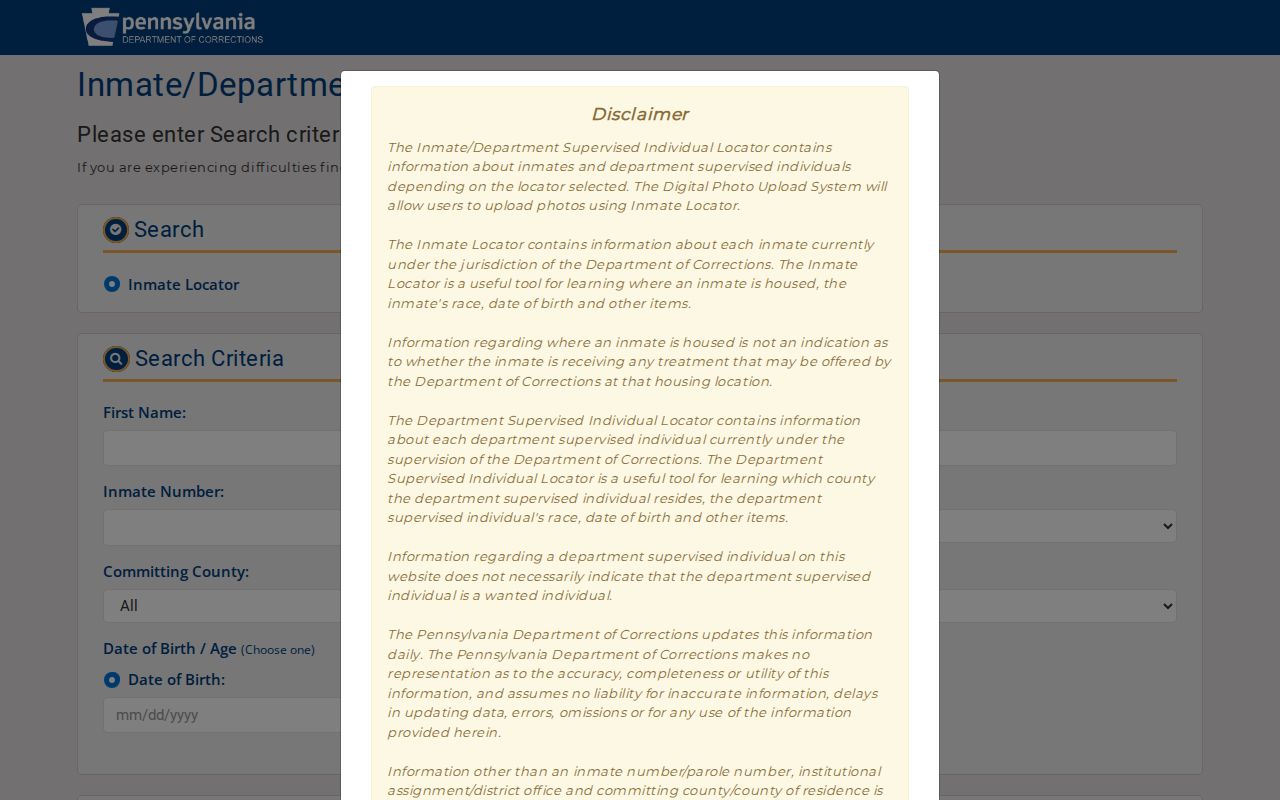
The key limitation is easy to miss. The current-inmate public search does not expose a universal “Projected Release Date” or “Tentative Release Date.” The supervised-person side can show an exact “Release Date” after release to current DOC supervision. That field confirms a past state-prison transition, not a future date and not the end of the sentence.
A fully discharged person may be absent because the tool is current-jurisdiction oriented. A missing result can also reflect spelling, delay, transfer, another jurisdiction, or no state custody. Use the sentencing docket, Board records, or a focused DOC records request for historic discharge or calculated dates that the public interface does not show.
McKean Pennsylvania Sentence Dates
Under 42 Pa.C.S. § 9756, a Pennsylvania court imposing total confinement ordinarily states a maximum and minimum. Under the general rule, the minimum cannot exceed one-half of the maximum. DOC calculates the calendar minimum and maximum from the judgment, sentence commencement, credit, and sentence structure.
The minimum marks ordinary parole eligibility. The Parole Board may approve, refuse, or continue review, and an approval can remain subject to release planning or other lawful conditions. The maximum is the calculated sentence-expiration boundary, but recommitment and other lawful recalculations can affect it. Neither should be copied from a charge description or estimated from a news report.
The official Pennsylvania parole process states both the role of the minimum and the state's rejection of an 85-percent requirement.
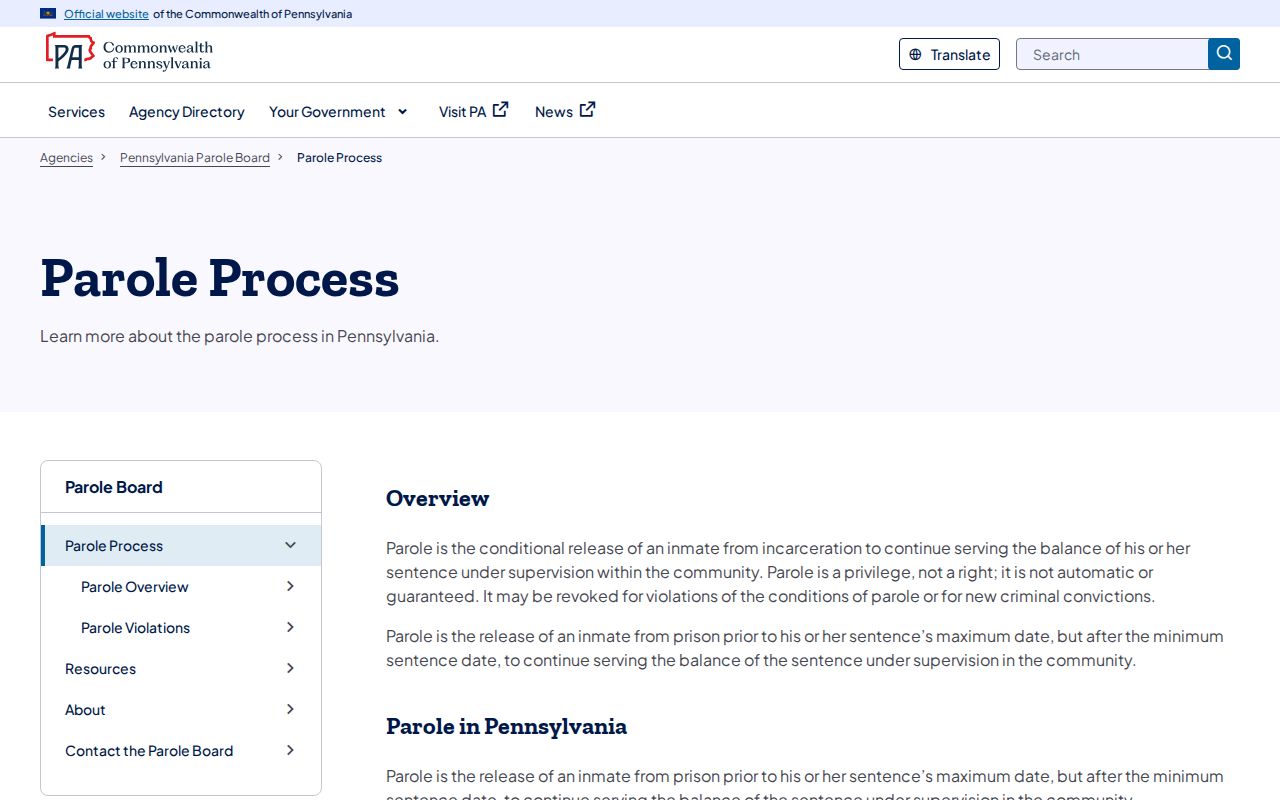
The captured state material is the proper source for that rule. Pennsylvania does not require an inmate to serve 85 percent of the maximum sentence before parole. Do not multiply a sentence by .85 to predict a McKean release.
Note: A Pennsylvania minimum date creates parole eligibility, while the later release decision and physical custody transaction answer whether release occurred.
McKean RRRI Release Eligibility
The Recidivism Risk Reduction Incentive, or RRRI, is Pennsylvania's principal statutory early-eligibility mechanism relevant to this search. It is not a universal day-for-day good-time rule. Under 61 Pa.C.S. § 4505, an eligible sentence includes its ordinary minimum and maximum plus an RRRI minimum.
For an eligible imposed minimum of three years or less, the statutory RRRI minimum is three-fourths of the imposed minimum. When the imposed minimum exceeds three years, the statute uses five-sixths, with rounding as directed. Thus, as a bare arithmetic illustration, an eligible two-year imposed minimum yields a three-fourths calculation before the legal and calendar details are applied. A four-year imposed minimum uses the five-sixths fraction. These examples do not predict any person's release.
Eligibility exclusions, sentence aggregation, program requirements, misconduct, and the decision process matter. RRRI supplies a possible earlier eligibility minimum, not an automatic release date. Confirm that the sentencing order and DOC calculation actually recognize RRRI before using the fraction. County jail cases should not receive a state RRRI calculation unless the sentence and governing law make it applicable.
Note: An RRRI minimum is an eligibility calculation, not a promise that release will occur on that date.
McKean Short Sentence Parole
61 Pa.C.S. Chapter 61 includes Short Sentence Parole. Section 6137.1 provides a statutory decision route for eligible state prisoners at the ordinary or RRRI minimum, whichever is shorter. It remains subject to exclusions and exceptions, including misconduct, pending felonies, and specified warrants or detainers.
Short Sentence Parole should not be described as automatic release for every person with a short term. The correct record set includes the sentencing order, DOC calculation, eligibility determination, Board process, and later custody transaction. A review or decision date may precede physical release because plans, holds, or processing remain open.
McKean County sentences follow county court and county parole administration. Search the local docket, obtain the order, and ask McKean Adult Probation or the jail for the calculation they maintain. Do not import state-prison Short Sentence Parole rules into a county case based only on sentence length.
McKean County Jail Sentence Dates
A county jail date starts with the McKean Court of Common Pleas order. Read the imposed term, whether other terms run at the same time or one after another, the credited time, and any county parole language. Concurrent terms run together, while consecutive terms run in sequence. The public PA DOC locator does not calculate a county jail date merely because the case arose in Pennsylvania.
After reviewing the UJS docket, request the signed sentencing or modification order when the docket text is abbreviated. Then contact McKean County Adult Probation or McKean County Jail for the calculation or release entry they maintain. Adult Probation handles county parole planning and community supervision. The jail records the physical custody departure and destination. These records answer different parts of the date question.
Do not invent a local good-time rate. The research found no published McKean policy that supports a universal county reduction. RRRI and Short Sentence Parole are state-sentence frameworks and should not be applied to a county case without a legal basis in the sentence and governing law. Bail also is not a date calculation. A bail change permits release only after its terms are met and all other holds clear.
Why McKean Release Dates Change
A date can move because the legal sentence, credit, eligibility, custody, or release plan changes. The effect depends on the actual record. A delay does not always mean discipline, and an earlier date does not always mean parole. Compare the revised calculation with its source.
| Factor | Possible effect | Record to check |
|---|---|---|
| Credit for time served | Changes the calendar calculation when lawfully awarded | Sentencing order and agency calculation |
| Consecutive or concurrent terms | Changes how multiple sentences combine | Judgment and DOC or county computation |
| Amended order or appellate relief | Can alter the controlling sentence | UJS docket and signed order |
| RRRI determination | May establish a different eligibility minimum | Sentence and DOC eligibility record |
| Misconduct or incomplete planning | Can affect a statutory route or delay physical release | Board Action and corrections record |
| Detainer or warrant | Can cause continued detention or a custodial transfer | Receiving agency and release transaction |
| Parole refusal or deferment | Leaves the person confined past the minimum | Board Action or Decision |
Recommitment and backtime can also trigger recalculation after a parole violation. Aggregation, sentence commencement, and an amended credit award can change both displayed and internal dates. There is no sound shortcut around the current judgment and official computation.
A Board review month is not a release appointment. Even an approval can depend on an accepted home plan, detainer resolution, or another step identified in the decision. When a date changes, ask for the revised computation or order and identify which factor caused it. That is more reliable than comparing two undated search screenshots or assuming the later date reflects misconduct.
Confirm McKean Actual Release Dates
For a county inmate, compare the court authority with the McKean County Jail release transaction. Ask for the recorded date, time, type, and destination. For a state prisoner released to parole, read the supervised-person locator's Release Date and verify the displayed district or location. A Board Action explains the decision, but the physical release can occur later.
PA SAVIN through VINELink can send a future custody-change alert for covered county jail, state prison, or state parole events. Registration helps with timing, but agency-fed notices can lag and a transfer notice does not mean community release. The McKean VINE inmate check gives the exact one-person search and alert steps.
When public data is missing, request the existing release or discharge record from the correct custodian. Pennsylvania's Right-to-Know process applies to agency records with exemptions, redaction, and appeal rules, while court records follow judicial access procedures. Ask for a defined record and date range. Do not ask an agency to create a projected-date report that it does not maintain.
Note: Confirm the release with the agency that held the person, then check any receiving custodian or supervision record named in the transaction.